Serengeti Great Migration: Where to Go in Different Seasons
The Great Migration is a moving ecosystem rather than a scheduled show. Choosing where to stay matters as much as choosing the month.
Seasonal and practical considerations
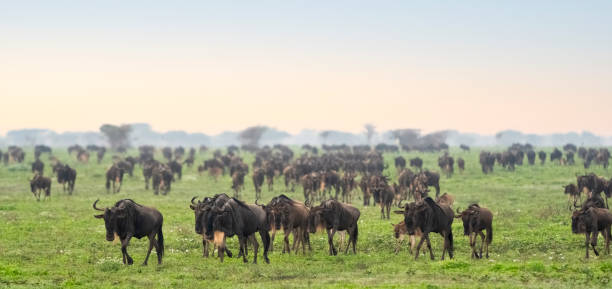
The southern Serengeti and Ndutu ecosystem commonly draw migrating herds during the calving season, often around January to March. As grasses and rainfall shift, large concentrations may move west and later north toward the Mara River region. Northern crossings are often discussed for July to October, yet neither the presence of herds nor an individual crossing can be reserved in advance. Animals may remain in a region longer than expected or change direction after rain.
- Southern Serengeti and Ndutu
The plains near Ndutu are associated with calving activity during parts of the early year. The exact distribution of animals moves with vegetation and rains.
- Western corridors and moving herds
As conditions change, herds may travel through the western and central sections. A guide needs current local reports rather than assuming all animals occupy a single point.
- Northern Serengeti and river country
During parts of the dry season, many travelers target the Mara River area. Crossings are unpredictable and can require patient game drives without any guarantee of witnessing one.
- Migration is not the only wildlife
Resident lions, elephants, giraffes, birds and smaller species provide strong viewing opportunities even when a large herd is elsewhere.
Follow habitat rather than a date on a poster
Accommodation location determines how much daylight is spent driving to an area of interest. A central Serengeti camp gives broad year-round wildlife opportunities, but may require lengthy transfers to reach specific migration sectors. When booking, ask which sector is planned for your month, how flexible the driving route is, and what happens if the herds are elsewhere.
How to read a migration map
Migration maps often show arrows representing broad seasonal tendencies. They are not GPS forecasts for a specific herd on a certain morning. Ask whether the proposed accommodation is in central, southern, western or northern Serengeti, and how long the safari vehicle will need to reach a targeted area. The actual animal movements should guide day-to-day decisions. Resident lions, elephants, birds and smaller mammals remain part of a good safari even when migrating herds are elsewhere.
A practical example for travelers
Migration-focused advertisements sometimes use river-crossing photographs throughout the year even when the suggested lodging is far from the river area. Always ask for the specific Serengeti region named in the quotation and the month for which it is proposed. In the south, grass conditions and calving season shape the experience; farther north, rivers become important at other times. Resident wildlife can make a stay rewarding even when the main herds are elsewhere. A flexible driver-guide and realistic distances are more useful than a promise to witness a dramatic crossing on an exact date.
A useful question for your travel planner
Build flexibility into the camp location and avoid itineraries promising a crossing on one preselected morning.
A frequently asked question
When are the river crossings?
They are often associated with roughly July to October, but dates and locations shift each year.